

Jonathan Ott's Amicus Brief
An old head's resistance to MAPS's psychedelic medicalization project.

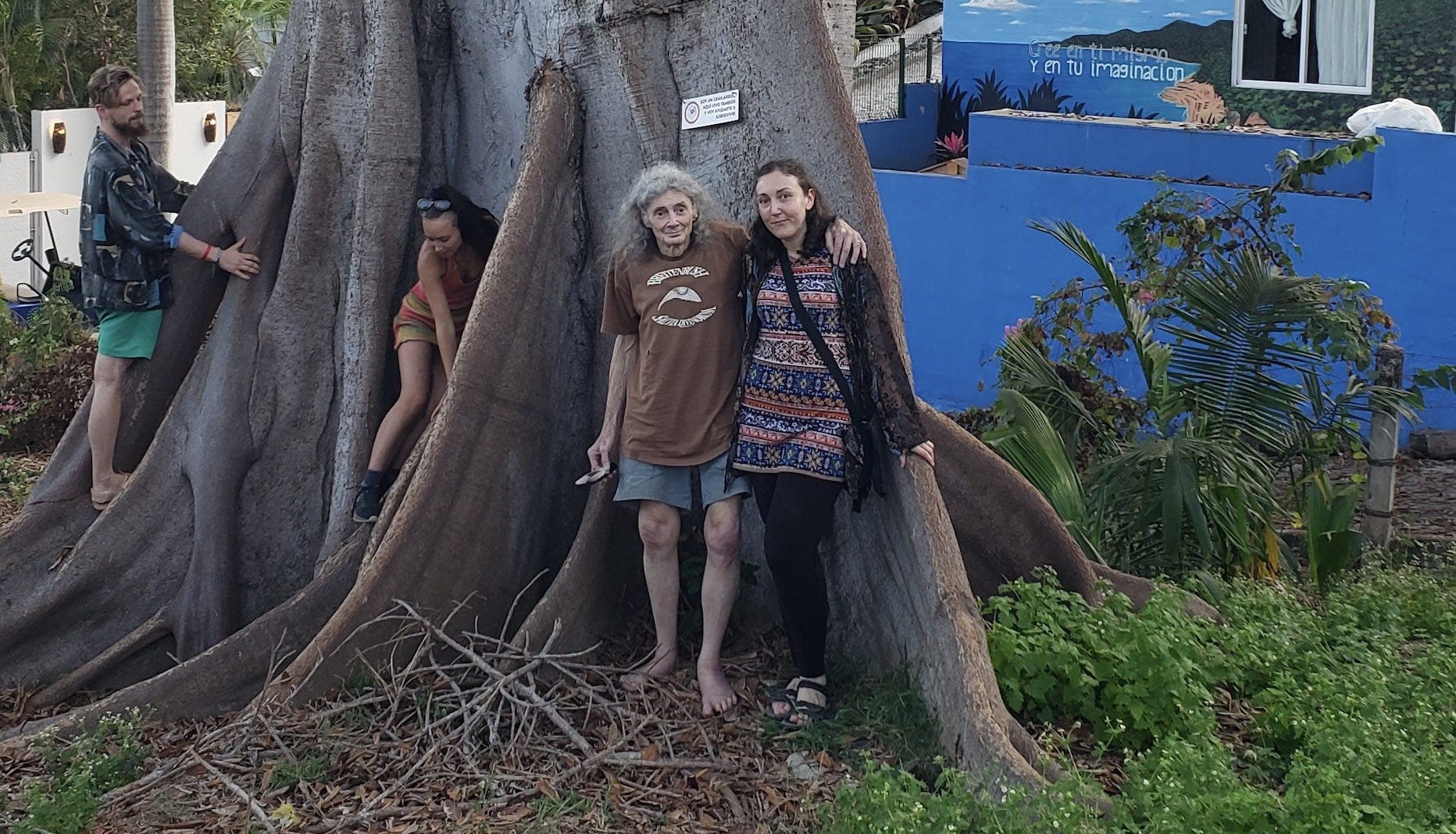
I met Jonathan Ott — the polymath who coined “entheogen,” who died last month on July 5 — at a weird and interstitial moment in my career. After pulling an all-nighter finishing the open letter on MAPS’s clinical trials that I would later submit to the FDA, I had just landed in Mexico for the Semantrix Colloquium on Psychedelic Poetics — my core interest that I’m gradually working my way back to. As I opened this substack over a year ago:
“Hand on heart, I would rather be doing so many other things with my time than pointing out bad behavior and preventable harms in the psychedelics space. I got into the field because I wanted to study literary trip reports — but I learned there were shady things happening that needed to be talked about, unfortunately.”

Sleep deprived, I tumbled into the village of Sayulita on April 10, 2024, having just launched the public writing that would define my life and work over the next year. In an apartment where some of the newly arriving folk were gathering, I found myself with a small crew of heads — most of whom I didn’t yet know, but who felt very familiar. I was immediately reminded of my psychedelic roots in conferences from the field’s early days.
Jonathan Ott — originally sprawled out on the balcony — found his way to the inside table and sat down next to me. We gelled immediately; in my psychedelic neurodivergent writerly essence, he recognized a comrade-in-arms. (I should note, Ott wasn’t a fan of the word “psychedelic.”)
We talked shop on psychedelic literature, but our conversation also turned to my recent open letter, along with my motivations for organizing it. Ott immediately understood the seriousness of my concerns, and he supported the effort.

Having spoken to Ott at length about his concerns with the mainstream psychedelic industry, it’s been disconcerting to watch his recuperation by organizations like MAPS and Chacruna in the weeks since his death. Ott was overtly opposed to their projects.
Reanne Crane, who organized the Semantrix Colloquium with Rosalind Stone, beautifully captured this aspect of Ott’s orientation in a July 8 post commemorating his passing, which I share here with permission:
Rest in Paradise, Jonathan Ott.
Truly one of the most extraordinary minds I’ve ever had the privilege to encounter.
Jonathan was arguably the most comprehensive polymath in psychedelic history, and almost certainly its most principled and uncompromising critic.
Concerned that medical frameworks would lead to oppressive gatekeeping and institutionalised stigma, he completely rejected the idea that legalisation or medicalisation were any indication of liberation.
He grew increasingly disillusioned with the direction of the movement he helped shape, finding large-scale psychedelic gatherings to be distasteful, commercialised, performative and fundamentally a disservice to the very substances they claimed to revere. He eventually came to feel tokenised, historicised, and objectified by them.
And yet, until the very end, he remained a witty walking encyclopaedia, a bard, and, proudly, a self-proclaimed “doper”.
I hope wherever he is now, the apothecary is well-stocked.
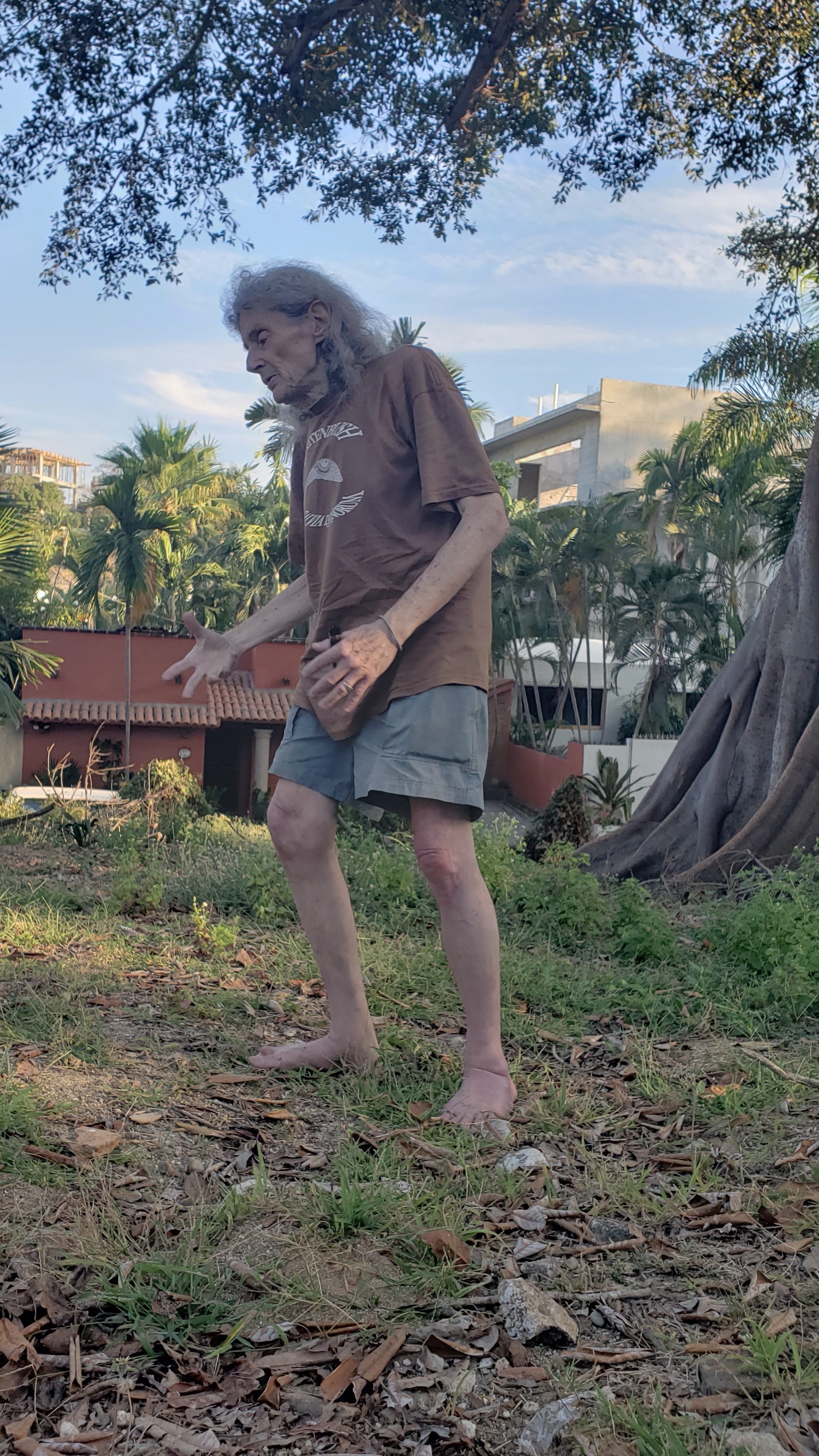
Here are some photos from his last event here in Sayulita (a 43-hour round trip by bus from his home in Veracruz, as per his travel preferences.)
Will share some of the footage from that week soon.
For now, thank you, Jonathan.
Based on our conversations in Mexico, Ott wanted to support my citizens petition with his own “amicus brief,” which he submitted to the FDA’s docket for public comments. In honor of his passing, and a year after the FDA rejected Lykos’ MDMA-assisted therapy application, I share his contribution below.
Ott emailed me the draft on April 20, 2024, with the following comment:
“I hope this is of use to you…. Again, I applaud your efforts to rein–in MAPS and Rick Doblin, and trust that they will bear fruit. It was a pleasure meeting you in Sayulita and I look forward to your book, Chemical Poetics[.]” — Jonathan Ott
Jonathan Ott’s Amicus Brief
Docket No. FDA-2024-N-1938
In Re:
[Psychopharmacologic Drugs Advisory Committee; Notice of Meeting; Establishment of a Public Docket; Request for Comments]
Amicus Curiæ Public Comment
I am a retired Chemist and Ethnopharmacognosist, who has specialized in the field of shamanism and psychoptic (or visionary) drugs for five decades. I have authored peer–reviewed scientific articles, and some dozen books in the field. Moreover, for a few years in the 1990s I did pro bono editorial work for the MAPS Bulletin. I ceased doing so, when I discovered that the Principal of MAPS, Dr. Richard Doblin, was censoring my work for political reasons, and because the actions of the Non–Profit were in open disaccord with public statements made repeatedly by Doblin for purposes of soliciting funding. I realize this is not the brief of the FDA, nor its Advisory Committee, but mention it in support of my long–standing interest in, and familiarity with, MAPS and its goals.
To the purpose:
On pharmacological grounds, I strongly oppose the MAPS application for FDA approval of 3,4–methylene–dioxymethamphetamine (MDMA; chemically: N,α– dimethyl–1,3–benzodioxole–5–ethanamine; CAS Reg. No. 42542–10–9), for some, or any, clinical psychotherapeutic use, in conjunction with a proprietary psychotherapeutic regimen. It should not go without saying, that the drug not only is non–novel—hence, un–patentable—but more than one Century old; moreover, that it yet remains a Schedule I Controlled Substance, under US Public Law 91–513, «The Comprehensive Drug Abuse Prevention and Control Act of 1970», and its Amendments, Supercedents and/or Addenda (Public Law 98–473, «The Comprehensive Crime Control Act of 1984»… Public Law 99–570, «Controlled Substance Analogue Enforcement Act of 1986»; and others). This, alone, should give pause to the FDA, and any Entity presuming to manufacture and distribute the drug for clinical use whatever—if (unwisely) approved, it promises to be a bonanza for Tort–Attorneys.
The irredeemable pharmacological flaw in the evidence submitted in support of said MAPS application is obvious: too many uncontrolled variables. The FDA is asked to take the unprecedented step, of approving a Century–old, well–known and thoroughly–documented controlled substance, specifically classified as having a «high potential for abuse» and «no recognized medical use»; moreover, in exclusive conjunction with an experimental psychotherapy, developed by an Entity, with no clinical experience in psychotherapy whatever. The experimental evidence appropriately compares and contrasts this unprecedented combination–therapy with best available therapies, but there is no control of its conjoined elements. That is: there is no way of ascertaining whether any claimed therapeutic benefits accrue from: a) the drug, MDMA; b) the psychotherapy; or c) the two combined. On this ground, the FDA should reject the MAPS application: as inadequately, or not in the least, supported, by the evidence submitted in its favor.
Merely pursuant to the psychotherapeutic arm, there are further uncontrolled variables: distinct Psychotherapists, who unavoidably will have varied their therapy according to individual experience/or and practice; and the evolution, over time, of the Therapeutic Protocol itself. Here, we have far too much random and withal uncontrolled noise.
I sha’n’t retail the abundant pharmacological evidence accrued, which testifies to the possibility of neurotoxic sequelæ from this particular drug, MDMA,* but only remark that it is a poor choice for the pharmacological arm of this unusual combination–therapy. There are several psychoptic (visionary) drugs with a much lower potential risk–profile, that could have been combined with the MAPS psychotherapy. However, surely it is not the brief of the FDA to approve or reject psychotherapeutic regimens, which come and go with the Seasons; neither to approve or reject drugs, pursuant to their combination with such. This consideration alone should be sufficient to lead to the decision to reject the MAPS application. Since the drug cannot be patented, MAPS is asking the FDA to take the most unusual and unprecedented (besides, being extra–statutory) step, of approving what is an experimental psychotherapy; moreover, in licensing a currently illegal drug exclusively to its concomitant use.
Jonathan Ott
[Natural US Citizen]
Apartado Postal 532
Xalapa, Veracruz
México 91001
* [Jonathan Ott. 1996, Pharmacotheon: Entheogenic Drugs, Their Plant Source and History. Natural Products Co., Kennewick, WA; / Schmidt, C.J., 1987, J. Pharmacol. and Exp. Ther. 240: 1; / McKenna, D.J. & S.J. Peroutka, 1990, J. Neurochem. 54(1): 14–22; / McKenna, D.J. et al., 1991, Pharmacol. Biochem. & Behav. 38: 505–512.]
mm- thank you for sharing. interesting tone and interesting considerations on his part
Thanks for sharing this story. We are kindred spirits. I would be very interested to read any post you wrote about psychedelic poetics.